Tavano: Education that Understands the Child, Not the Other Way Around
Redesigning the adaptive learning experience for digital-era children through a multisensory approach.
Pitch Deck
Case Study Summary
The Situation
Modern children, like my niece, often struggle to focus on conventional learning methods yet are highly responsive to visual and kinetic stimuli (like TikTok trends).
01. The Human Context
It began with an observation of my niece, who is still in kindergarten. When faced with reading books or traditional speaking learning methods, her focus evaporates within minutes. Surprisingly, however, she could memorize body movements and audio rhythms from TikTok videos scrolling across the screen with incredible speed and precision. This was an epiphany. This generation of children isn’t wrong; conventional education systems simply fail to speak their language.
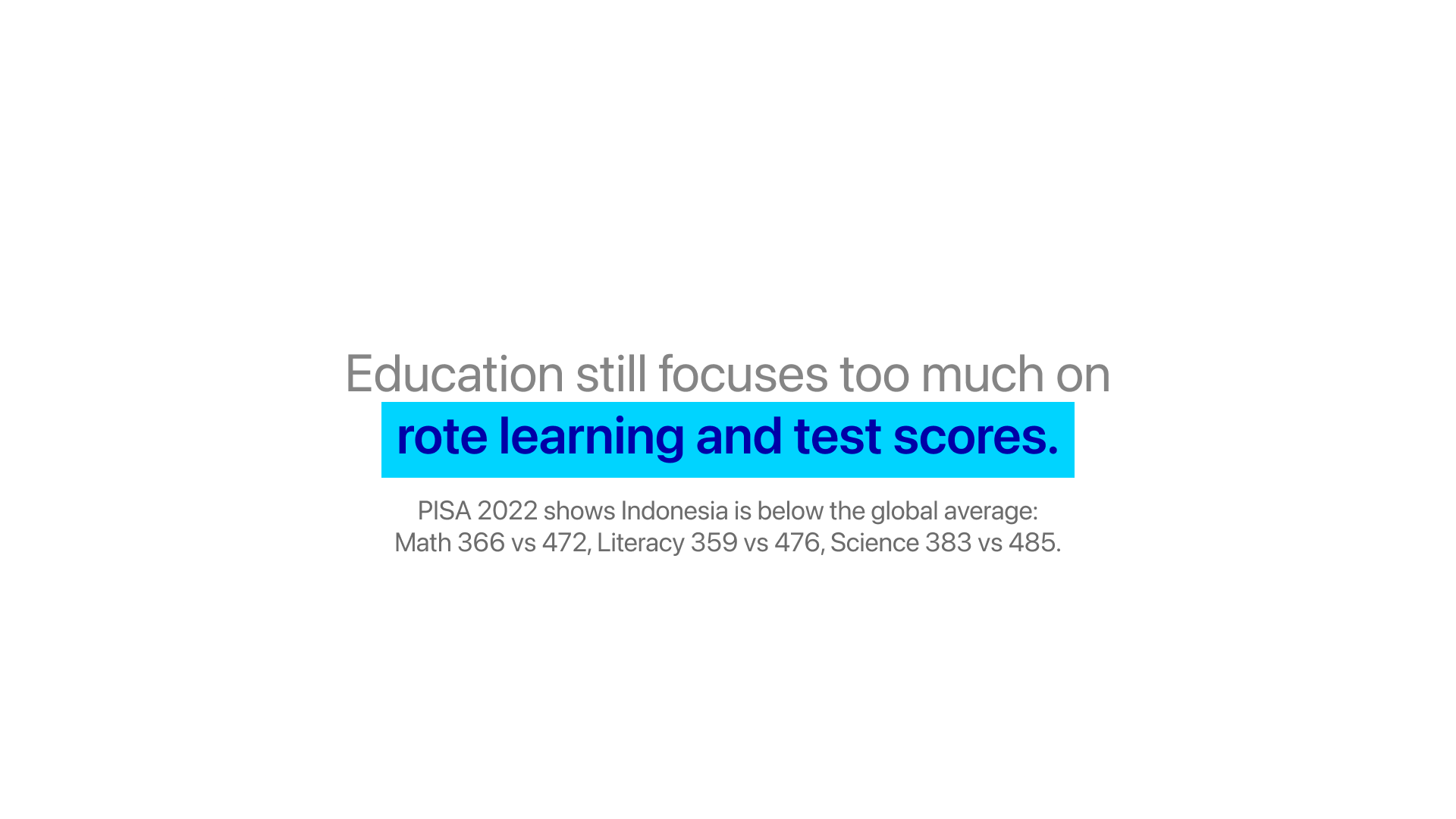
Rigid education systems force children with dynamic visual, auditory, and kinetic learning styles to sit still and read for hours.
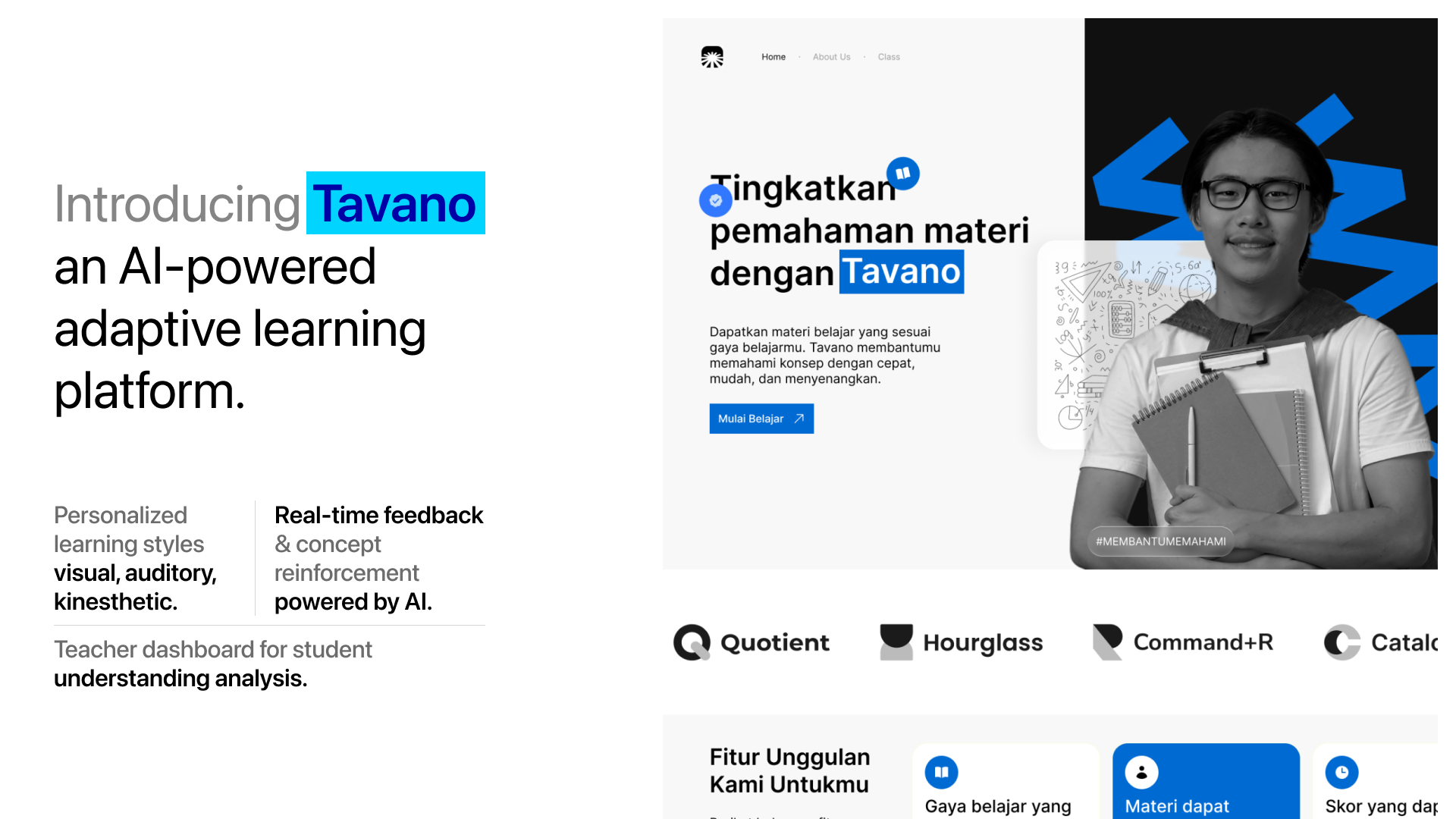
Building Tavano—a platform that adapts to a child's unique way of learning, presenting specific content formats based on their engagement profile.
02. Engineering with Empathy
Killing the Multiple-Choice Paradigm
The first challenge was discarding old paradigms. We agreed to kill the rigid and intimidating multiple-choice format. Instead, we built a humanistic testing architecture. In the early stages, the application presents material in formats that respond to their tendencies—text, interactive videos triggering physical movement, or purely auditory experiences that happen to be highly inclusive for visually impaired children.
The Challenge of NLP Architecture
Evaluation is conducted organically. If the material is video-based, questions appear contextually within the video interface and are answered via essay. If auditory, the child simply explains the answer directly through voice. We utilized artificial intelligence to process natural language and provide initial scoring. However, because children’s articulation and language styles are prone to being misunderstood by algorithms, we designed a human-in-the-loop flow. AI accelerates curation, but teachers are retained as final validators to correct machine interpretations.
03. Reflection & Future Iteration
Browser limitations on mobile devices are often the biggest barrier to a child’s curiosity. Transitioning to a native app isn’t just about performance, it’s about tearing down accessibility friction.
Developing Tavano as a web-based app gave us very fast iteration flexibility in the early stages, but it also opened our eyes to what I call accessibility friction. As Lead Engineer, I realized that loading latency and the need to navigate via URLs ruin the instant, intuitive experience.
My biggest lesson here was knowing when to pivot the architecture. Tavano is currently a solid proof of concept, but its future absolutely lies within the native mobile ecosystem.
Continue Exploring
Related insights: WeSee: Limitless Independent Navigation , Collaboration Philosophy: Building with Empathy, Managing Without Ego .
FAQ
What problem does Tavano solve?
Tavano addresses the mismatch between rigid classroom-style digital learning and the visual, auditory, and kinetic learning preferences of many children.
How does Tavano use AI in learning assessment?
Tavano uses AI to process essay and voice-based answers for initial evaluation, while human teachers remain the final validators to reduce misinterpretation.