WeSee: Limitless Independent Navigation
Bridging visual limitations in public spaces through a blend of AI and volunteer empathy.
Pitch Deck
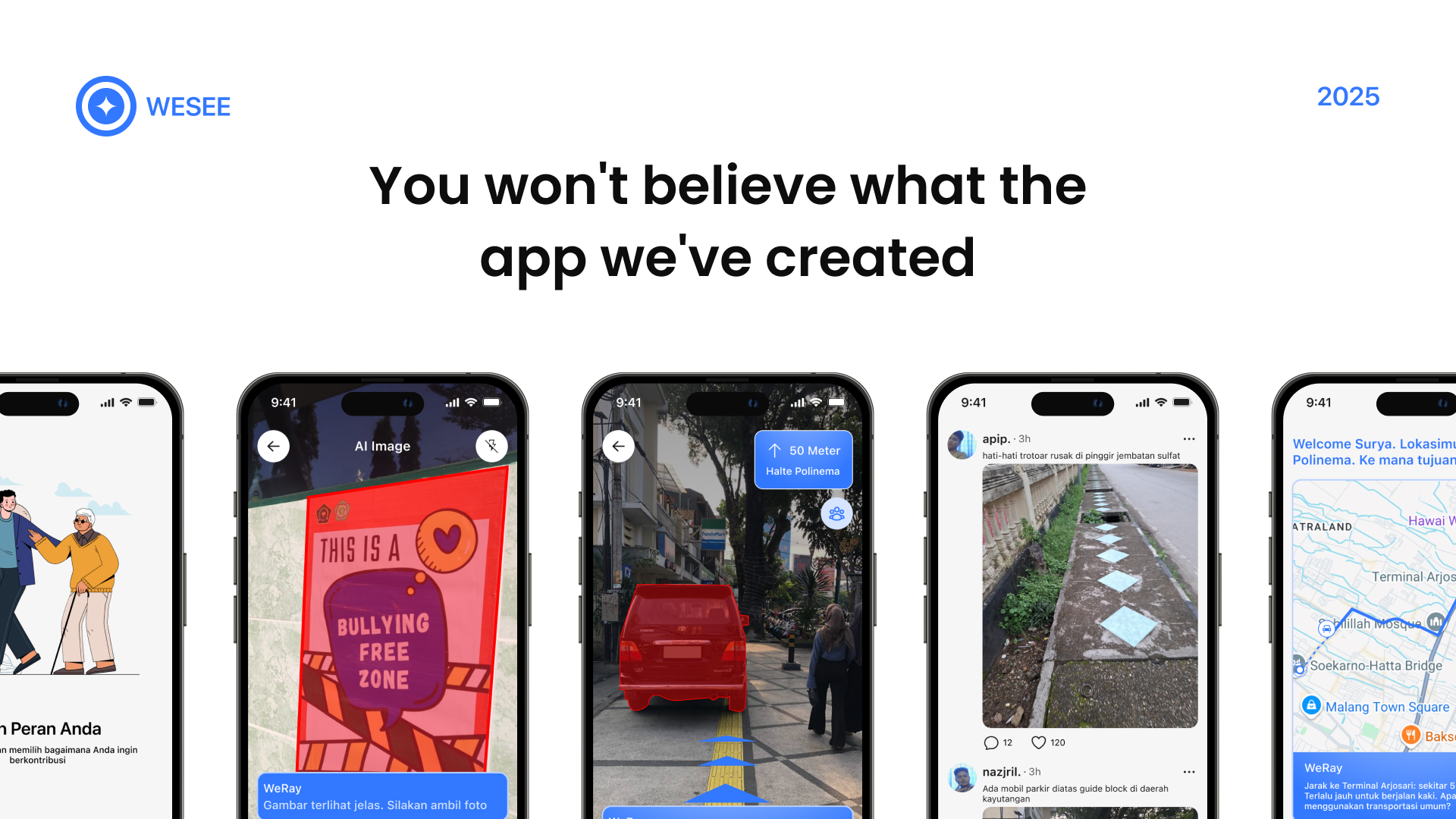
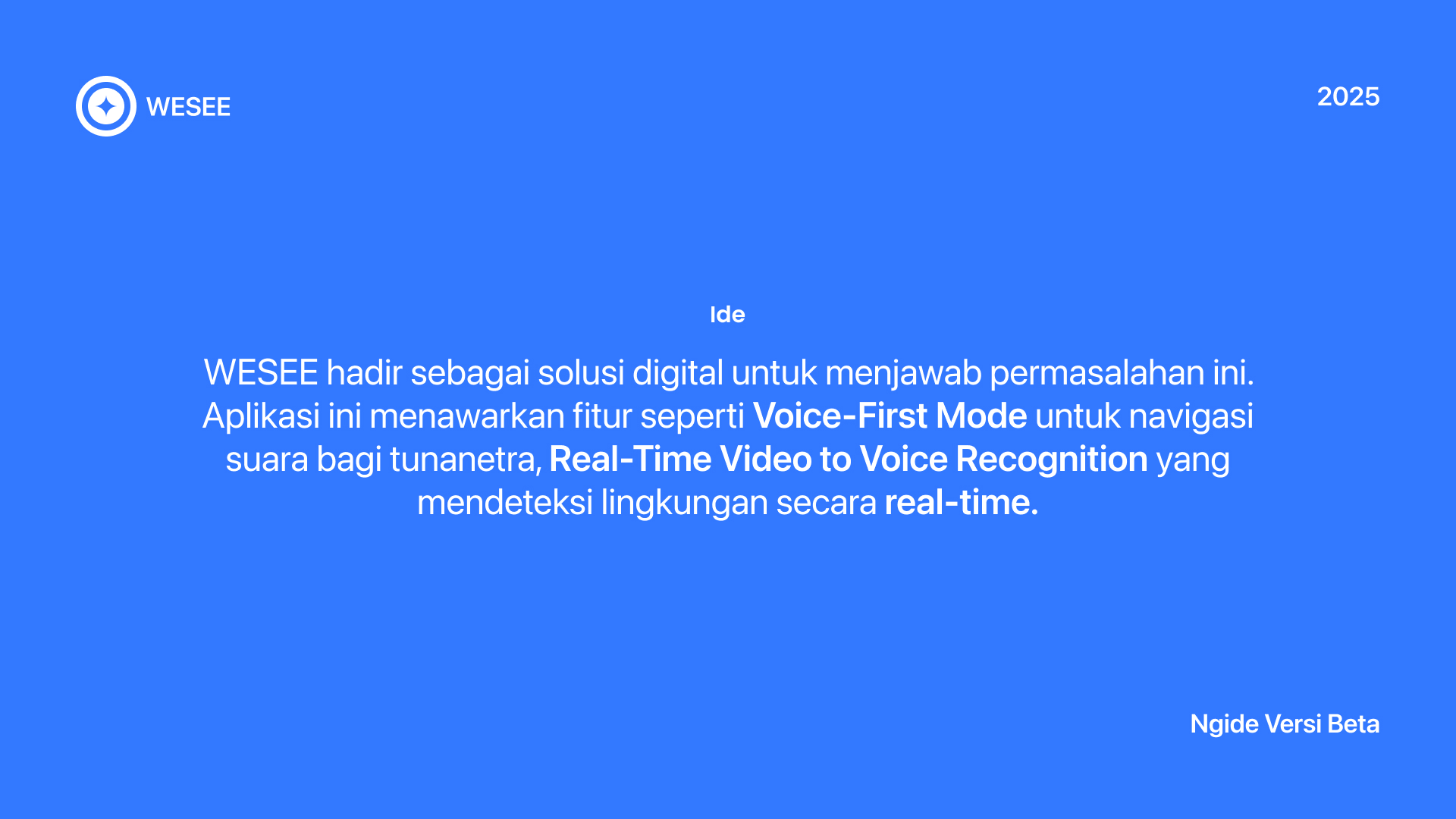
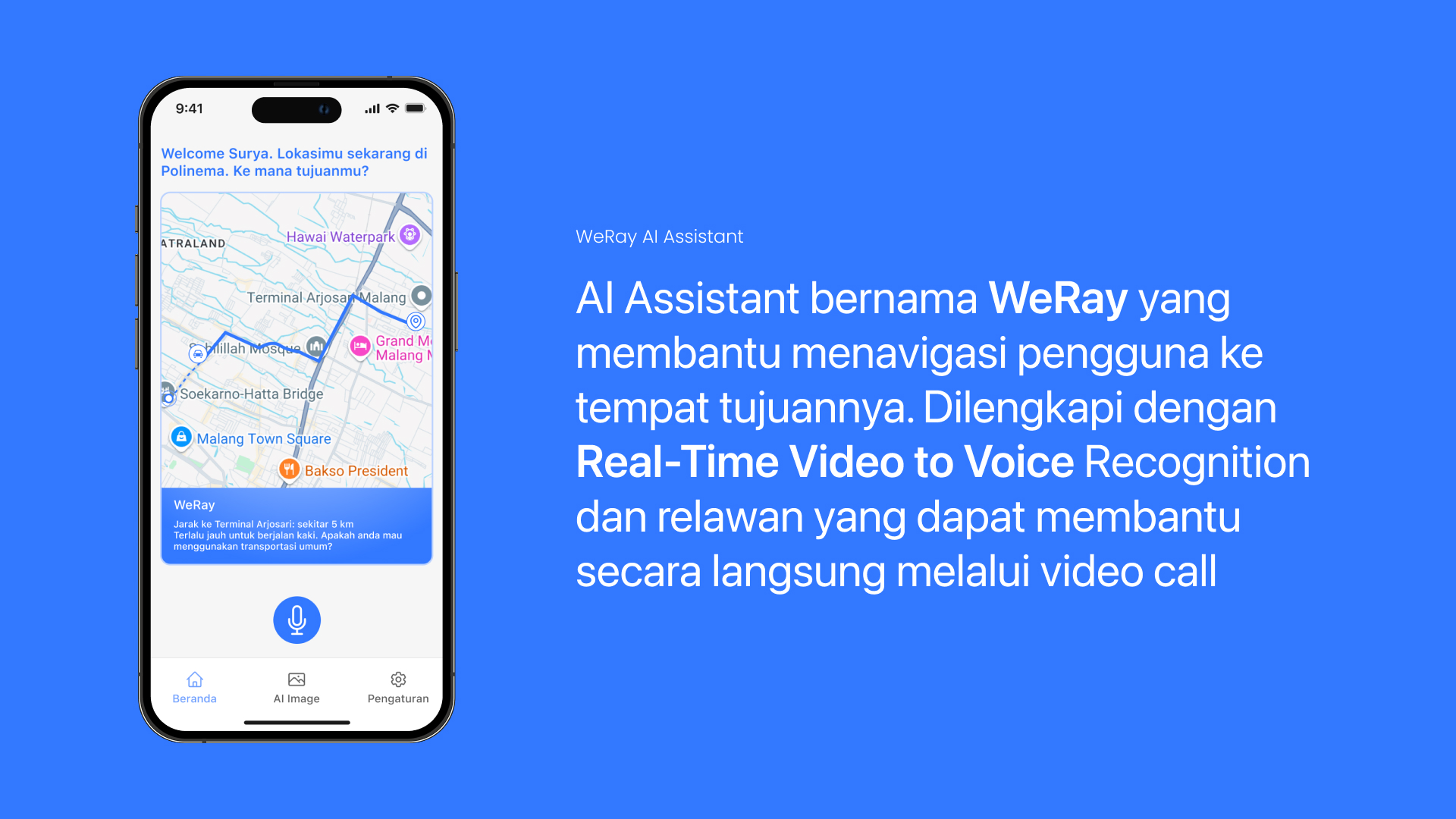
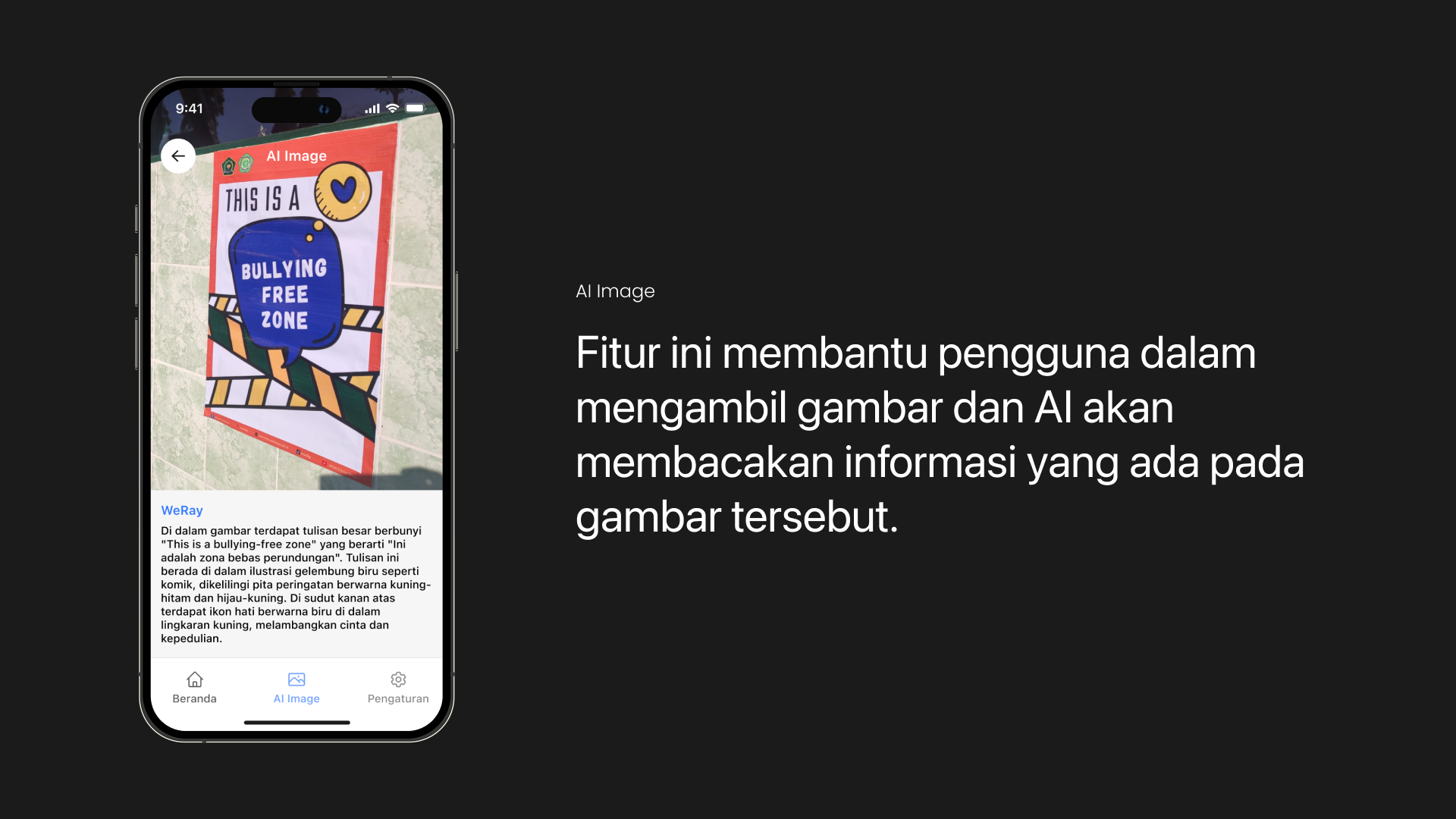
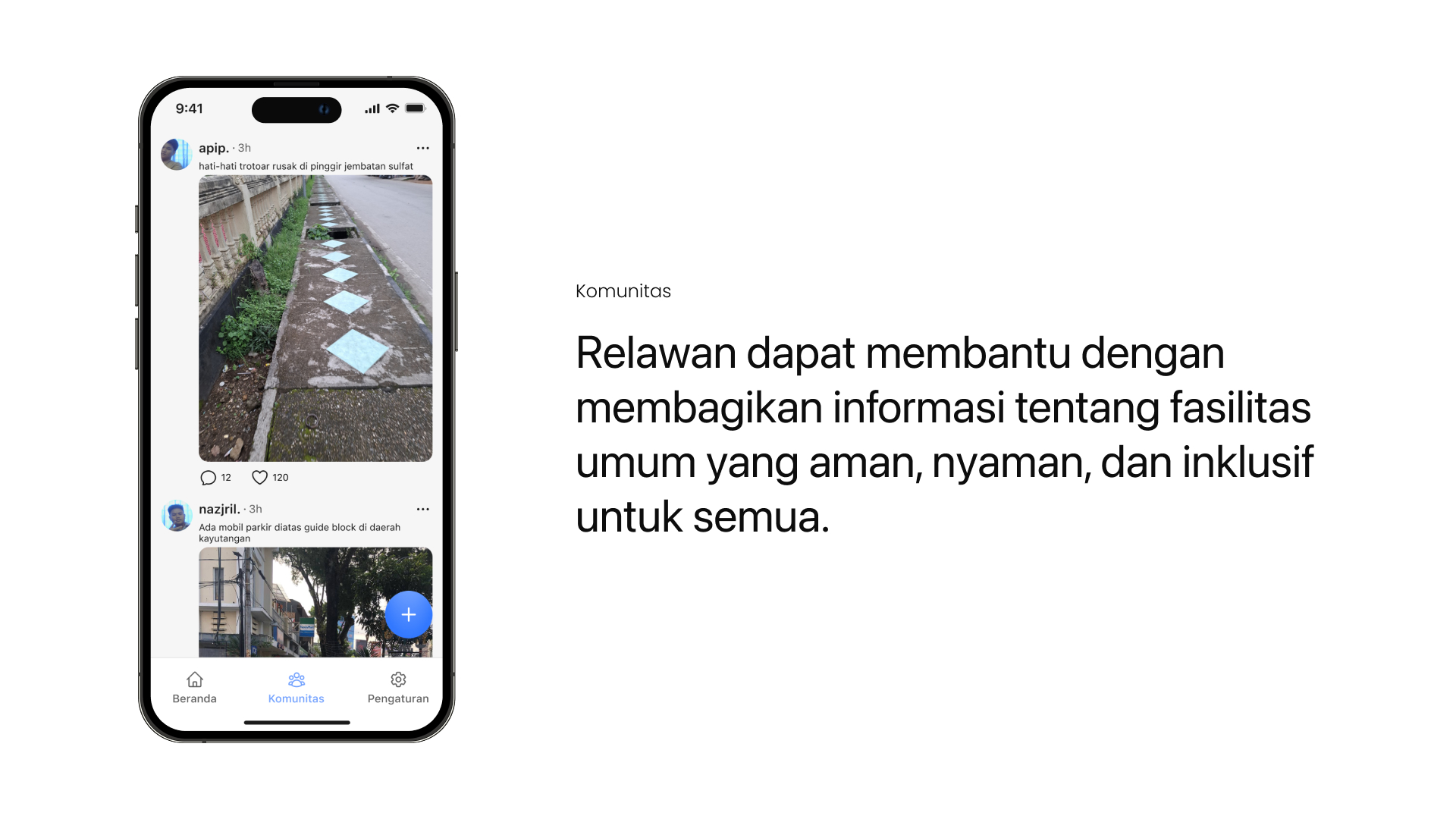
Case Study Summary
The Situation
A visually impaired couple often faced physical dangers due to poor road infrastructure while working as traveling merchants.
01. The Human Context
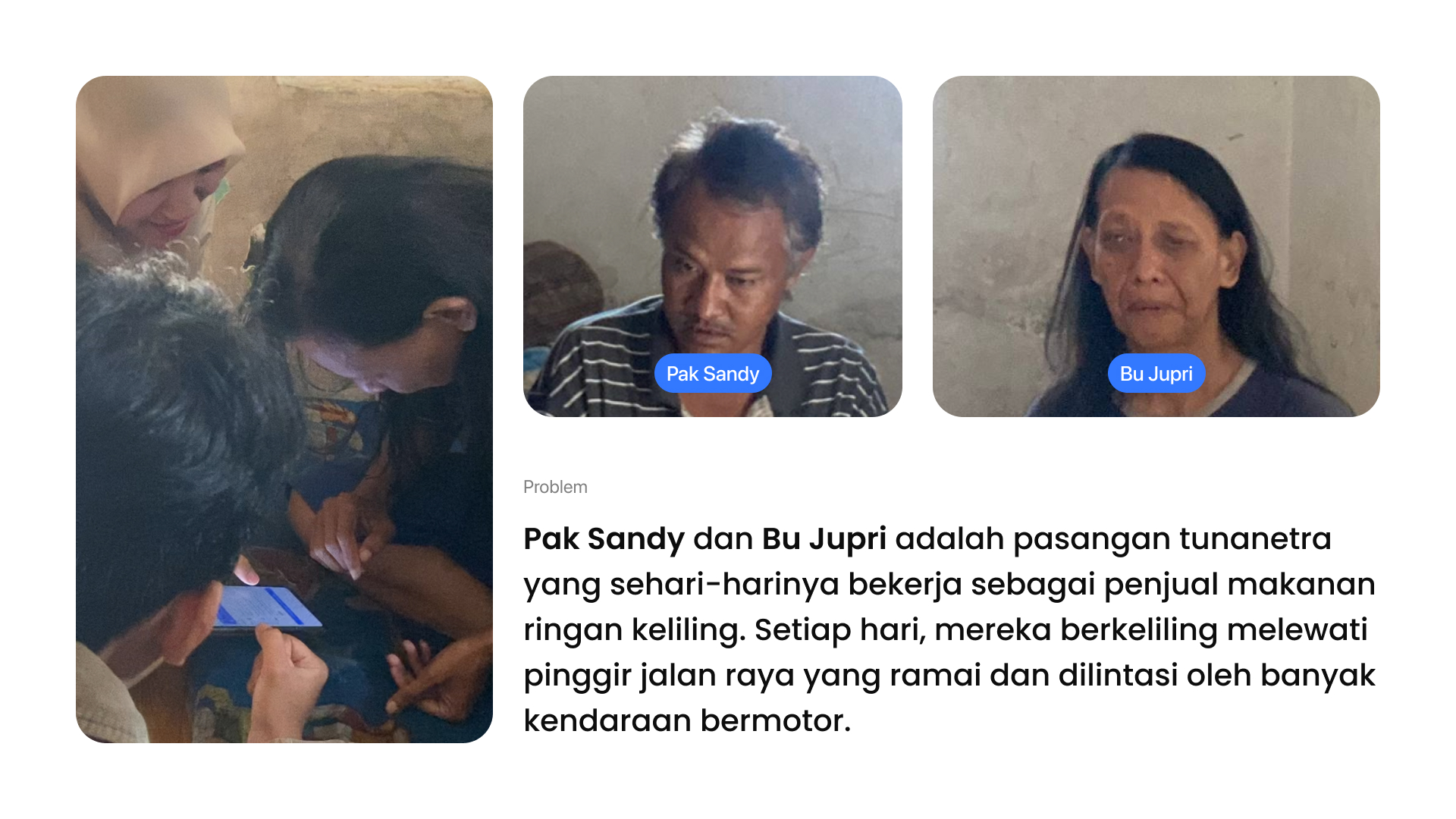
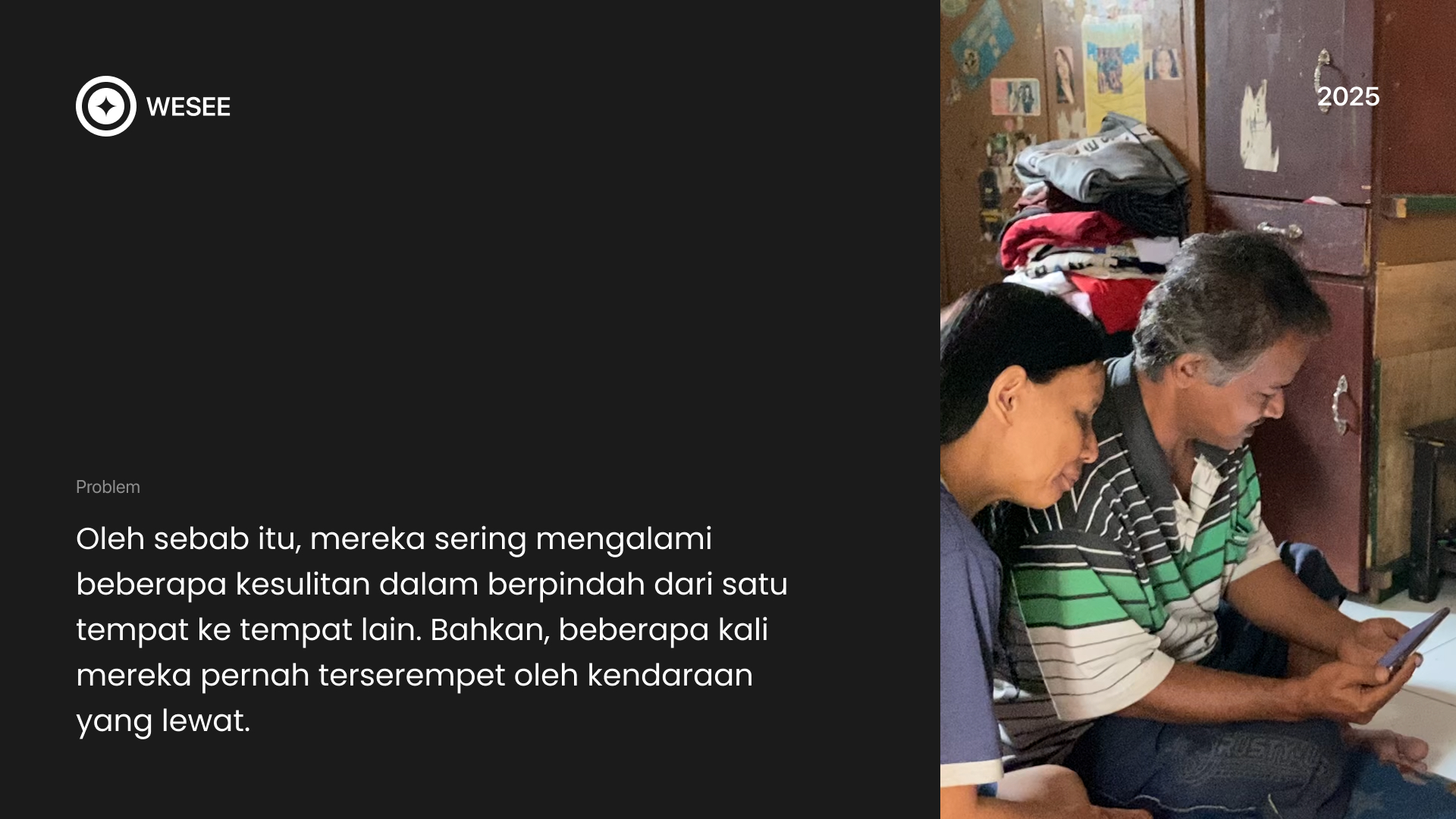
It all started with an observation in the field. We met an extraordinary couple working as traveling merchants. Their dynamic is unique: one has low-vision, while their partner is totally blind. Behind their persistent spirit, there is a bitter reality. They frequently face real dangers on the road. Inadequate infrastructure, unfriendly sidewalks, and incidents of being grazed by motorized vehicles became a daily routine threatening their physical safety. Their story became the catalyst for our team.
Unfriendly road infrastructure often endangers the physical independence of the visually impaired, while current assistant technologies remain too expensive or inaccessible.
Providing precise navigation using the smartphone cameras they already own as an additional 'eye' to guide them safely from point A to point B.
02. Engineering with Empathy
The initial idea was straightforward: create an AI-powered virtual assistant capable of identifying obstacles, potholes, and recognizing currency denominations. However, this is where our biggest debate lay. As engineers, it’s very easy to be swayed by technological sophistication. But we had to be honest. Current computer vision algorithms still have a margin of error.
Why We Don't Trust AI 100%
In the context of road navigation for the visually impaired, AI bias is not just a bug—it can be fatal. Pure automation systems are not mature enough to handle highly dynamic and life-threatening traffic edge-cases.
The system uses the smartphone camera to perform real-time computer vision processing. The algorithm detects objects, estimates distances, and reads out obstacles ahead.
03. Reflection & Future Iteration
True innovation is born not from computational sophistication, but when technology knows when to step back and let human empathy take over.
WeSee is not just an interface; it’s a lesson on the limits of technology. Our greatest validation wasn’t winning the UI/UX competition, but realizing that the best solution is often not the most computationally advanced, but the most humanizing. As an innovator, this project taught me that edge cases in accessibility are core features. Moving forward, we see WeSee evolving. The limitation of smartphone cameras requiring active hands will be solved through IoT integration, such as smart sensory canes or wearables.
Continue Exploring
Related insights: Collaboration Philosophy: Building with Empathy, Managing Without Ego , Tavano: Education that Understands the Child, Not the Other Way Around .
FAQ
How does WeSee reduce the risk of AI errors?
WeSee uses a hybrid system where AI handles routine detection, but users can immediately switch to a human volunteer when confidence drops or road conditions become too risky.
Why is human intervention important in WeSee?
Because navigation for visually impaired users can involve life-threatening edge cases, human intervention acts as a safety layer when computer vision alone is not reliable enough.